 Digital Archives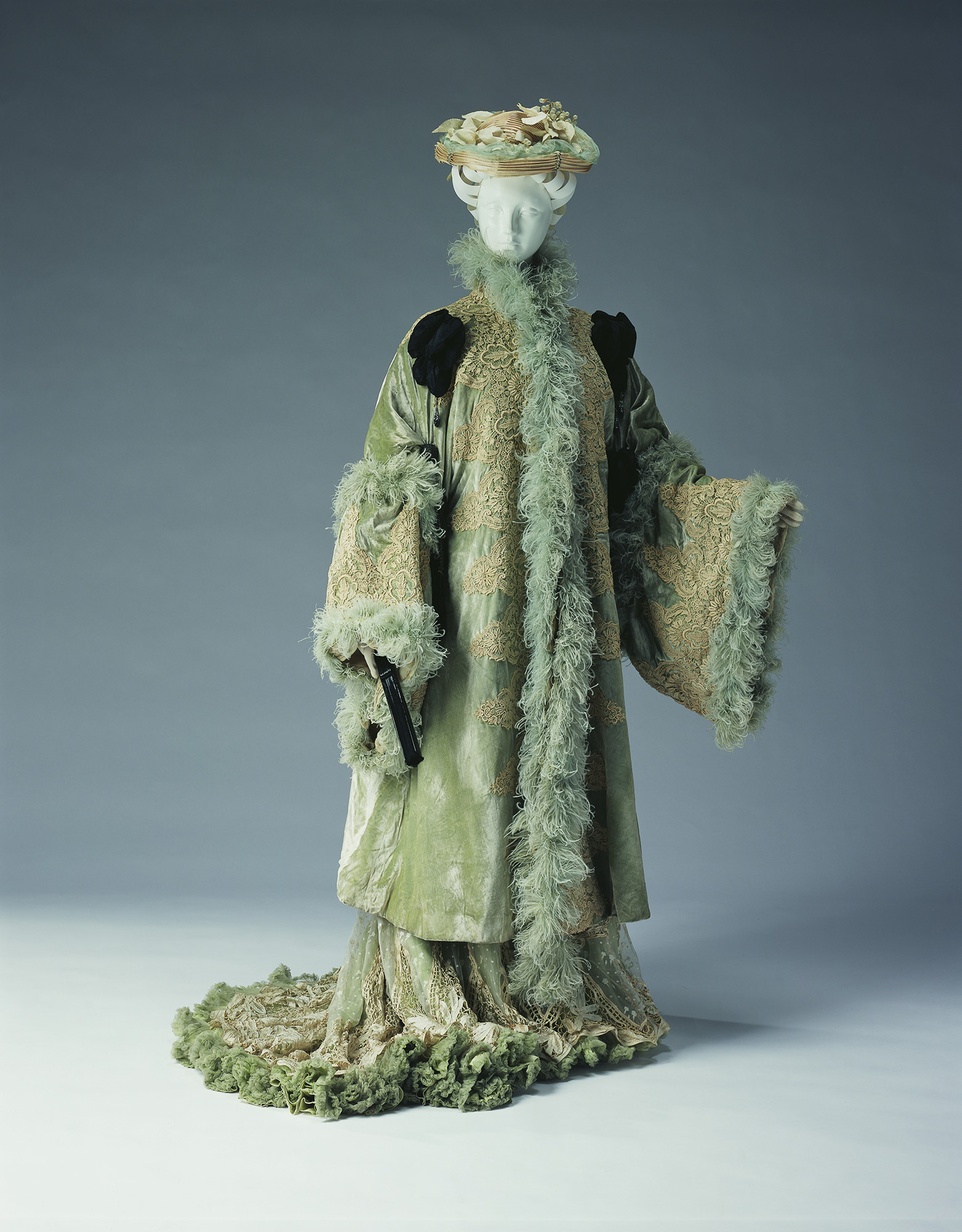
© The Kyoto Costume Institute, photo by Takashi Hatakeyama
You can enlarge by putting the mouse cursor on the image.
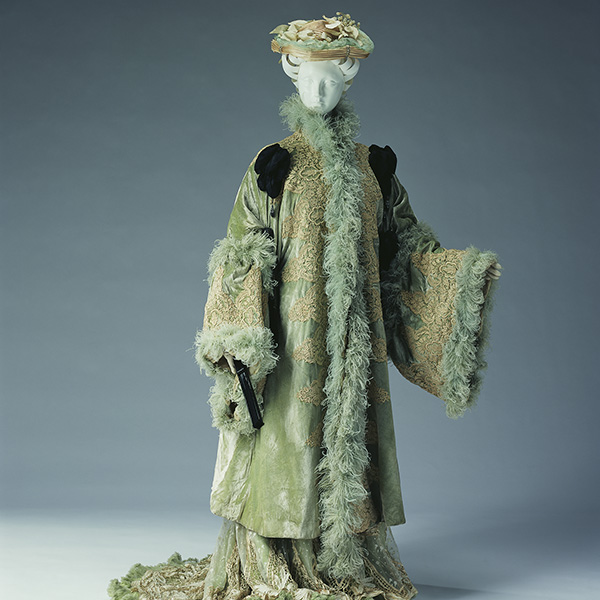
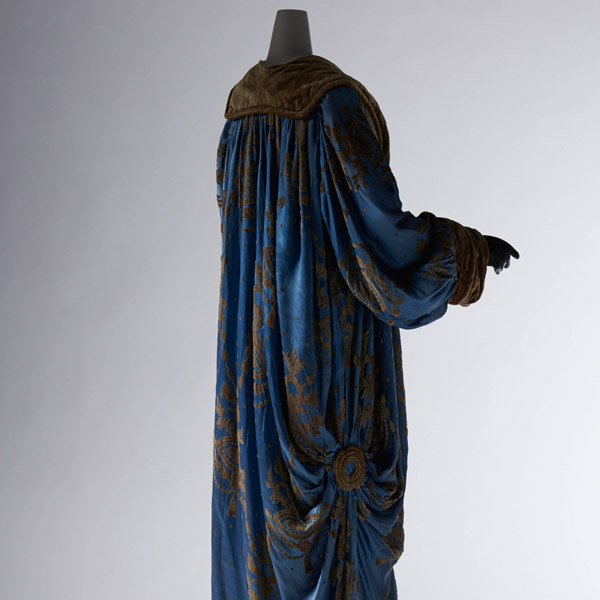
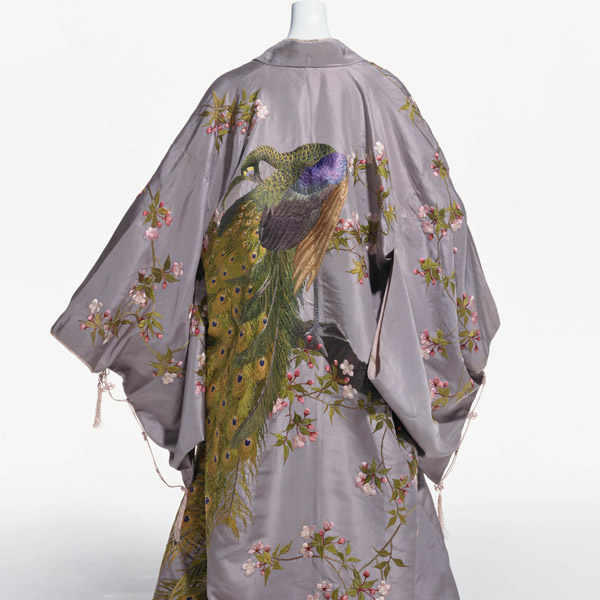
Evening Coat
c. 1900
- Designer
- Jean-Philippe Worth
- Brand
- Worth
- Label
- C. WORTH
- Material
- Pale-green silk velvet; appliqués of needlepoint lace; trimming of black silk taffeta garlands and green-dyed ostrich feathers.
- Inventory Number(s)
- AC4160 81-27-21
White lace has been extensively appliquéd onto this pale green silk velvet coat, which is decorated with generous use of ostrich feathers. The black silk taffeta used on the shoulders adds an accent to the soft color of the garment. The profuse decoration indicates that this is evening wear, while it also conveys the exaggerated decorativeness of the Art Nouveau style popular at the time.
The feathers of the ostrich—the largest bird in the world, noted for its layers of soft feathers as it is unable to fly—have fascinated people since ancient times. Ostrich feathers were prized by ancient Egyptian royal families, and in Europe they were a luxury item that only royalty and other privileged classes were permitted to wear. The origin of the emblem of the British Crown Prince featuring three ostrich feathers on the crown dates back to the Middle Ages, while the ostrich is even mentioned in Encyclopédie, published in France in the latter part of the 18th century. Together with peacock and heron feathers, the feathers of these birds were regarded as the most important in feather craft, as described in the entry on the plumassier (feather craftsman) in the 1774 edition. The 19th century, after the industrial revolution, was marked by an increase in consumer appetite amongst people in the West, resulting in the growth of ostrich farms. Huge quantities of feathers were collected from farms in California, Texas and South Africa, resulting in the general population now able to adorn themselves with ostrich feathers. However, it was feathers from the ostriches in North and West Africa that were prized as being of the highest quality. The feathers of this garment created by the House of Worth, famous for its use of luxury materials in its designs, could well have been sourced from wild ostriches.
1900s